
Source: A2A Protocol
Highlights
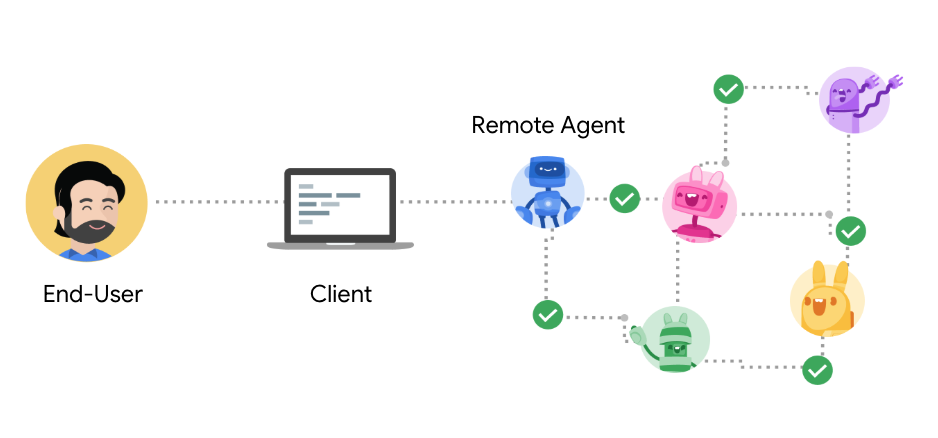
- Agents can self-discover each other via an Agent Card.
- Supports both immediate responses and long-running tasks.
- Defines security and authentication mechanisms.
- Multiple transport protocols supported:
JSON-RPC,gRPC, andHTTP + REST.
Key Concepts
The A2A protocol is comprehensive, and we will cover the most important concepts here.Agent Discovery: The Agent Card
Every Agent must expose an Agent Card, a JSON object that describes the Agent’s identity, capabilities, skills, service endpoint URL, and how clients should authenticate and interact with it. It is recommended to expose the Agent Card at the endpointhttps://{server_url}/.well-known/agent-card.json
Protocol Methods
message/sendmessage/streamtasks/gettasks/list
A2A with Agentor
Agentor provides built-in A2A support, making it effortless to create agents that can discover, communicate, and collaborate with other A2A-compatible agents.Key Features
- Agent Discovery: Automatic agent card generation at
/.well-known/agent-card.jsondescribing agent capabilities, skills, and endpoints - Standard Communication: JSON-RPC based messaging with support for both streaming and non-streaming responses
- Rich Interactions: Built-in support for tasks, status updates, and artifact sharing between agents
agent.serve() automatically becomes A2A-compatible with standardized endpoints for message sending, streaming, and task management.